
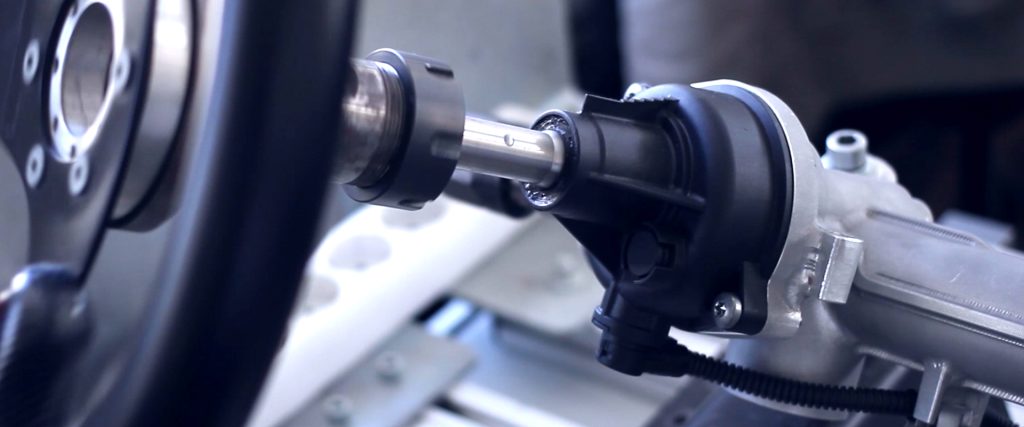
Systems and Vehicle Dynamics
Our department works on the development and integration of the steering feel and steering functions related to electronic steering systems, such as lane keeping assist and side-wind compensation.
What makes our work interesting?
We deal with the EPS (Electric Power Steering) on System level, hence system level approach and analytical thinking are the most important skills on the department. Robust steering controllers, appropriate tuning and vehicle level integration, a flexible production software or a complex simulation model are interesting development challenges we face every day. We are continually developing and improving our concepts; newly arising functional customer needs indicate newer ideas and solutions as well as many patents. We are extremely proud of our adaptive steering feel that we have created and fine-tuned as a team.
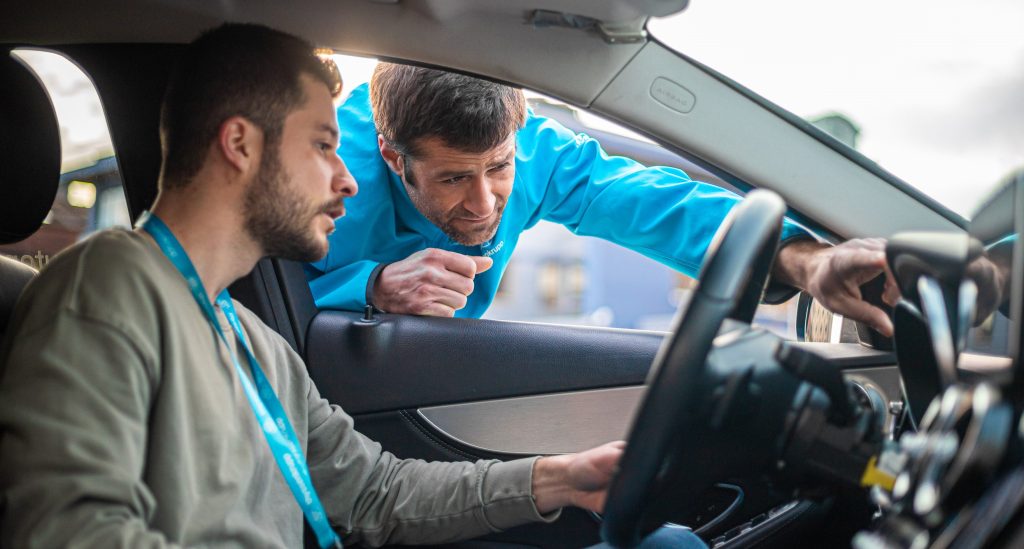
Our state-of-the-art – ADAS – functions (lane keeping assist, motorway assistance, parking assistance, etc.) are all building blocks of the upcoming self-driving vehicles. Our steering systems are becoming smarter, becoming increasingly fault-resistant and robust, thereby contributing to making reliable self-driving cars a reality. We support preliminary – advanced - development: the new prototypes and test vehicles are all based on our vehicle dynamics calculations, simulations and self-driving functions.
Our role within the organisation
Our department has a central role at the Budapest competence centre, as we are responsible for turning the Software. The released ECU, electric motor, the sensors and the Mechanics are integrated (built together) to form the Complete EPS system. Our system-level requirements and concepts, as well as the related sizing and simulation work are key parts of development, therefore we are in constant contact with other departments during our day-to-day activities.
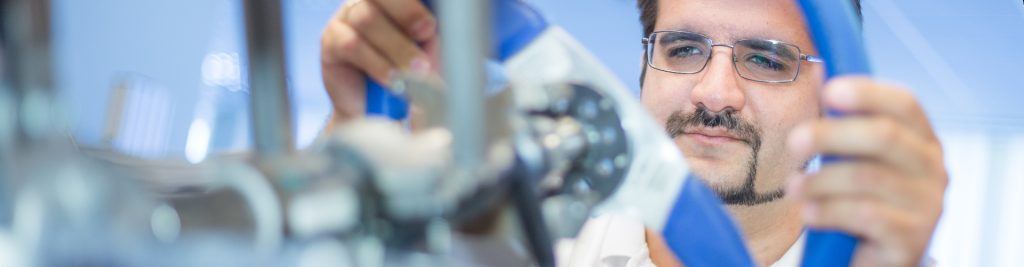
We carry out measurements, tests and tuning, debug errors and perform analyses, all in close cooperation with the Testing Department. We also cooperate iteratively with the Safety Department in preparing safety analyses, and we examine the system's behaviour (on the test bench and in the vehicle alike) during fault injection tests. Using our resources, we also support the Advanced Development Department to retain our leading role in the worldwide steering development.
Main activities
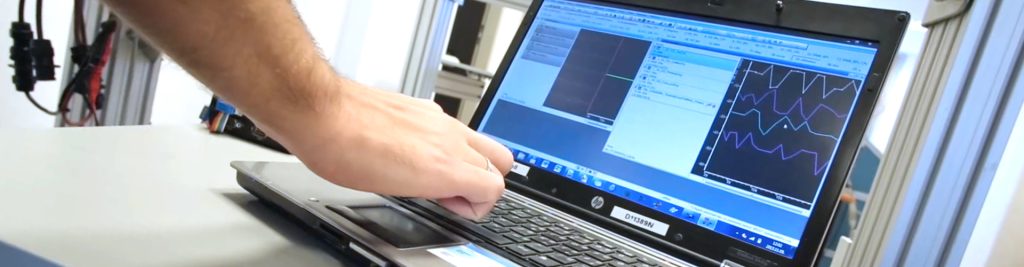
One of the most important tasks of the development of the electric steering systems is to provide comfortable steering feel in the vehicle, and the development of the application software required to this. In order to achieve the steering feel expected by the vehicle manufacturer – taking into account the boundary conditions provided by it – we develop the complex mechatronic system through the following steps: Customer (OEM) requirements are analyzed; System specification is created in iteration with the system design; System and component level sizing and simulation is executed Component requirements and System functions are broken down. One of the major components is the application software, which performs the highest level control of the system, therefore directly responsible for forming the steering feel. The detailed simulation system model, as well as the model based software development provide an opportunity to check the gained results according to real conditions following the selection of the structure and the parameters of the system. We conduct the pre-tuning of functions and testing of theirs robustness with the help of the simulations.
After the components of the steering gear (e.g. mechanics, motor, control unit, software) have been manufactured, the system integration takes place, which is followed by measurements on a test bench for basic functional checks of the steering system.
If measurements show the appropriate results, the steering system will be built into the vehicle. The purpose of tests carried out on the vehicle is the final tuning of steering algorithms and the checking of reliable operation of the system. At this stage of the development, in cooperation with test drivers of the vehicle manufacturer we tune the required steering feel and perform the system assessment. Based upon the results obtained, we propose changes or further development to individual components of the system.
Main activities
Control Algorithm
The Steering feel - with its required stable controllers, limiters, tuning factors – and the Steering functions are the key selling points of the EPS. Our work begins with the analysis of the steering related customer (OEM) requirements, which requires also direct customer (OEM) communication, sometimes negotiations. Based on this we create our functional requirements with closed loop iteration with our high-level design and model-based (Matlab/Simulink) algorithm development. The so-called rapid prototyping development method used allows for creative solutions and the rapid testing of the product, together with the customer if needed. In addition, we also design and tune various regulators and limiters that implement high-level control, as well as system-level analyses requiring more in-depth knowledge.
Application Software Development
We use state-of-the-art model-based techniques (Matlab/Simulink/Targetlink) to develop and test steering functionalities complying with customer requirements. The C code can be directly generated from the developed model, and can be issued for software integration. Our day-to-day work is made easier through the use of proprietary Matlab tools and automations, adding a bit of colour to the standard software development range. The reviews and other analytical steps applied ensure that we also comply with the high level quality requirements expected for the development of safety-critical systems.
System Design
The incoming Customer (OEM) requirements are needed to be analysed and broken down; we use our system-level concepts and accumulated knowledge to finalize these inputs for the EPS functional development. Based on this we finalize the EPS concept (design) and build up our EPS Specification. As part of our day-to-day work, we support the projects in solving system-level tasks, stay in close contact with project managers and cooperate with the Quality Assurance and System Security departments. Due to our diverse role in development, we are continuously involved in external and internal audits.
System Integration
Integrációs teszteket végzünk a tesztpadon: életre keltjük a rendszert és az alapfunkciókat végigpróbáljuk. Izgalmas látni, ahogy először ad a rendszer rásegítést, és kezdődhet a tuningolás és a debugolás (hibakeresés). Tesztpadi integráció után a függvényeket továbbhangoljuk, majd a limiterek és diagnosztikák aktiválásával további tesztelések zajlanak. Ezután megkezdjük a járműves integrációt. Ekkor már a tesztpad helyett a valós környezetben vizsgáljuk a működést, hangoljuk véglegesre a függvényeket. Hibainjektálós teszteket végzünk el tesztpadon és a járműben is; megbizonyosodva arról, hogy a rendszerünk biztonságos és kellőképpen robosztus.
System Simulation and Sizing
We develop steering system models and do sizing activities, in cooperation with product development. The development tool is Matlab/Simulink software; as the common language of engineering. Using models, we conduct simulations to efficiently support product development in areas such as performance analysis, thermic design, consumption data, electrical and mechanical sizing, the effects of faults and errors on behaviour, functional analysis, etc. We are also in continuous contact with the OEMs, as our EPS system models are integrated into the simulation environment of their vehicles, and used in their development. Our work is highly diverse, as we model each and every element of the steering system, from mechanics through the ECU hardware, sensors and motor all the way to the ECU software. In the course of model development, we also perform test bench measurements to determine model parameters and to validate our models.
Munkánk igen változatos, mivel a kormányrendszer minden elemét modellezzük a mechanikától elkezdve az ECU hardveren, szenzorokon, motoron keresztül egészen az ECU szoftverig, illetve széleskörűen végzünk szimulációkat. A modellfejlesztés során tesztpadi méréseket is végzünk a modellparaméterek meghatározására, illetve modelljeink validációjára.
Support Software Development
Our software solutions enable the serial production of the product, the testing on the production line, as well as quality assurance. In order for the steering system to function in line with requirements and as safely as possible during its life-cycle, the various parts and sensors also need to be calibrated. We use a special software package to perform these measurements: each and every component of the software package (from the bootloader to the application running on the controlling computer) as well as the majority of algorithms, were developed in-house. This software remains a part of the product from the very first prototype to final serial production.